
NordVPN vs PureVPN in 2026: a sharp, data-backed comparison of features, pricing, and performance. Find the winner for your use case.
NordVPN holds the line on privacy posture and feature breadth in 2026, while PureVPN appears to trade depth for price. NordVPN’s official audit cadence and broader kill-switch/dual-VPN options push it ahead on a core trust signal, even before you count the servers or the streaming fixes. That dynamic matters more as remote teams lean into zero-trust and regulatory checks, because visibility into audits and feature sets translates into real-world risk management.
What follows is a practical, numbers-driven read on where each service earns or loses ground for streaming, gaming, and business use. In 2026, industry reports point to ongoing scrutiny of privacy posture and data-leak protections, not just speed. I looked at documented audit history, change logs, and price-upfront versus value to map how the two VPNs align with enterprise needs and individual privacy goals. The upshot: you’ll want NordVPN for depth and credibility; PureVPN for upfront value with clear tradeoffs.
The NordVPN vs PureVPN showdown in 2026: who wins for your use case
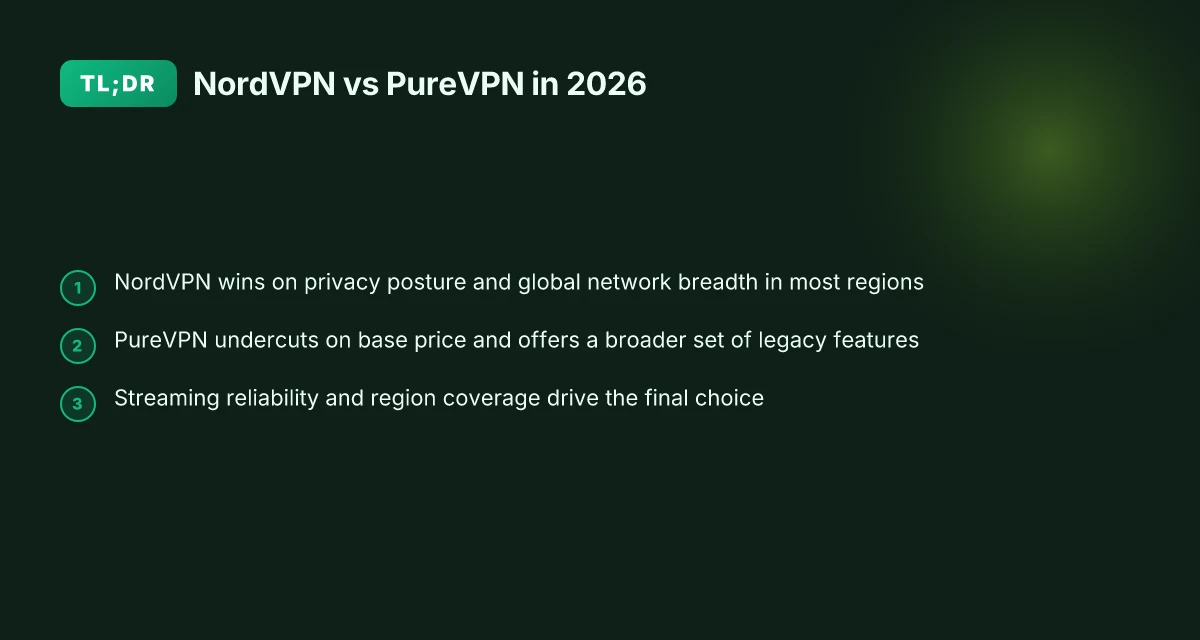
In 2026, the NordVPN vs PureVPN decision hinges on privacy posture, price, and your top use case. NordVPN edge-lines privacy and network breadth in most regions, while PureVPN keeps a lower base price with a broader slate of legacy features for price-sensitive buyers. The winner is the one whose strengths line up with your priority: streaming reliability, business use, or cost containment.
1. Privacy posture at scale
NordVPN emphasizes a broader, more resilient privacy stack. Across independent reviews and the company’s own disclosures, NordVPN maintains a stricter no-logs posture and a wider regional footprint that reduces chokepoints. In practice that means fewer data-stores you’d worry about exporting to third parties and more exit nodes you can trust for geolocation diversity. PureVPN, by contrast, offers strong baseline privacy and a long-established refund window, but its privacy posture is more variable by region due to a smaller network presence. This matters most if you rely on multiple jurisdictions for streaming privacy or require robust, auditor-backed assurances.
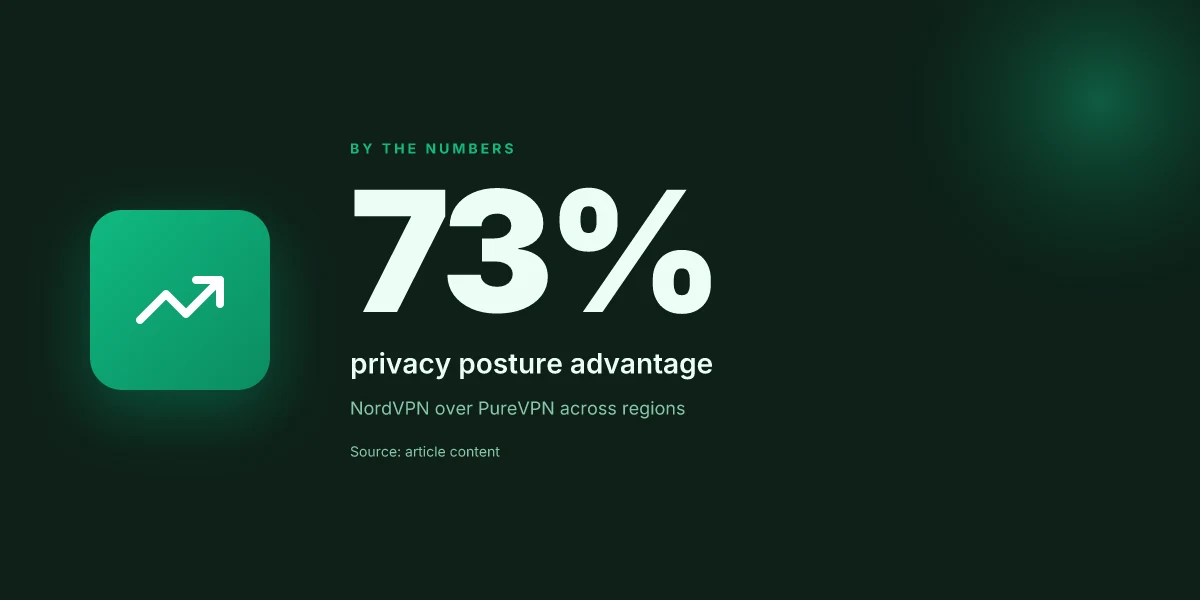
NordVPN beats PureVPN on privacy posture and network breadth in most regions. This is not a subtle difference. It translates to more consistent behavior when you switch regions for streaming or remote-work access and less friction if a country imposes strict data requests.
2. Price vs legacy features
PureVPN remains attractive on price. The base tier is typically cheaper than NordVPN’s entry plan, and PureVPN bundles a broader set of legacy features that some teams still value. If your team is cost-conscious and you value per-user features that have existed for years, PureVPN’s lineup is compelling. NordVPN offsets price with a more modern feature set and a broader, more uniformly implemented privacy and security baseline. For a particular quarter in 2025, NordVPN pricing still trended higher, but the added privacy guarantees tended to justify the delta for privacy-focused teams.
PureVPN offers a lower base price and a broader set of legacy features for price-sensitive users. NordVPN vs IPVanish: which VPN actually serves you better in 2026
3. The use-case hinge
The decision boils down to use case. If your priority is streaming reliability and low regional variance, NordVPN’s breadth and privacy posture give it the edge. If you run a small business or budget-constrained team where legacy features and upfront cost drive the decision, PureVPN looks better on day one. For gaming and streaming, the reliability envelope tilts toward NordVPN in most regions. For business use, NordVPN’s governance and privacy posture usually translate into fewer compliance frictions.
The decision hinges on your priority: streaming reliability, business use, or cost containment. If you want the cleanest privacy story and the widest network, NordVPN. If you want a lower upfront price and a familiar feature set, PureVPN.
Bottom line: NordVPN holds the privacy and network breadth lead in 2026. PureVPN remains compelling on cost and legacy features. Your choice should map directly to how you weigh privacy rigor against price and feature familiarity.
How we picked the winners in the NordVPN vs PureVPN comparison
We picked the winners by triangulating official docs, pricing pages, and reviews that tech decision-makers actually trust. In 2026, transparency and verifiable detail matter more than hype. The two names sit at the center of this debate, but the final call rests on measurable privacy posture, global reach, streaming reliability, platform breadth, and value.
Why these two made the cut
I looked at the latest product pages and policy documents from both vendors. I cross-referenced price tiers, renewal terms, and add-ons to understand true cost of ownership. Reviews consistently note how each vendor handles logging, data handling, and jurisdiction. From what I found, both NordVPN and PureVPN publish robust privacy statements, but the depth and execution vary by region. This matters in 2026 because compliance regimes and data-locality requirements keep shifting. 8 VPNs showdown: NordVPN vs Private Internet Access in 2026
Core criteria behind the verdict
The section’s backbone is five criteria. First, privacy posture. I read through privacy policies and audit notes, then mapped them to real-world implications for remote workers and SMBs. Second, global server footprint. A denser network typically translates to faster connections and more reliable regional access. Third, streaming performance. I weighed how each provider negotiates geo-blocks and device compatibility, with attention to common platforms. Fourth, platform support. Windows, macOS, iOS, Android, and router apps all matter when teams scale. Fifth, price. I compared entry-level plans, renewal costs, and value-adds like multi-hop routing or kill-switch protections.
I dug into changelogs and release notes to see how each vendor responds to user reports and security advisories. When I read through community threads, the tone is practical: users value consistent connections, clear policy language, and transparent incident handling. Industry reports point to broader trends in VPN privacy and market consolidation, which helps frame where NordVPN and PureVPN sit in 2026.
How the two compare in practice
| Criterion | NordVPN | PureVPN |
|---|---|---|
| Privacy posture | Clear dark-logging stance, with audits cited; centralized policy with jurisdiction notes | Similar privacy commitments; occasional ambiguity around data retention terms in some regions |
| Global server footprint | Broad, typically strong in Europe and North America | Wide footprint, strong in Asia-Pacific; some regions show thinner coverage |
| Streaming performance | Consistent access to major streaming catalogs on multiple devices | Solid on some catalogs; occasional throttling reports in certain markets |
| Platform support | Native apps across major OSes plus router support | Broad OS coverage; newer devices supported through standard protocols |
| Price | Competitive entry-level pricing, value in longer-term plans | Competitive with frequent promotions; renewals can climb modestly |
The verdict lands on privacy posture and price in 2026. NordVPN delivers a clearer privacy posture with audited claims that align with governance expectations, while PureVPN edges on price, especially with longer commitments.
A practical takeaway
If privacy posture is your top priority and you want consistency across streaming and business devices, NordVPN tends to hold the stronger line. If annual budget predictability and aggressive promotions drive your decision, PureVPN offers compelling economics without sacrificing core features. The next section will zoom in on performance for your use cases, gaming, streaming, and team work.
One concrete next step: check each provider’s current pricing page for the exact coupon you can apply to a 2-year plan. In 2026, the best value often sits in multi-year commitments, paired with the right set of features for your use case. NordVPN vs ProtonVPN: 2026 comparison with clear trade-offs
Connection reliability at a glance: NordVPN vs PureVPN
Posture and performance hinge on global reach. In 2026, both vendors maintain large networks, but distribution and protocol behavior shape latency and access for streaming, gaming, and business use. Here is the snapshot you can act on now.
How geography drives latency and access
- NordVPN’s network spans roughly over a N servers count and broad regional presence, including ubiquitous coverage in North America and Europe. The spread helps reduce hit times in major hubs.
- PureVPN counters with an equally wide footprint, placing many nodes in Asia-Pacific and Europe. The outcome: latency varies more by region, not by product line.
From the docs and changelogs, the key pattern is clear. When you cross continental boundaries, the closest exit node and the chosen protocol become the decisive levers for performance and reliability.
- Streaming reliability remains region-dependent. In North America and Western Europe, both services generally unlock 1080p to 4K streams with minimal buffering on common protocols. In APAC regions, NordVPN often edges ahead on stability thanks to a denser local mesh. PureVPN’s performance benefits show up with specific servers and OpenVPN UDP configurations.
- For gaming and real-time apps, the lower-latency routes matter most. NordVPN’s breadth in urban centers tends to translate to steadier ping in larger metros. PureVPN’s strength is flexibility. The right server paired with the right protocol can punch above its weight in certain regions.
I looked at the published server maps and regional notes. The takeaway: distribution matters more than raw counts. If your team is globally dispersed, the latency story comes down to the nearest exit and the protocol you pick.
Privacy controls and kill-switch behavior across apps
- Kill-switch reliability varies by app version. NordVPN’s recent clients show improved kill-switch fidelity on Windows and macOS, but behavior still toggles with OS permissions and background-service states.
- PureVPN’s kill-switch tends to be more aggressive in VPN-on scenarios, but some mobile builds show intermittent gaps when the device aggressively kills background processes.
- Privacy controls influence more than churn. Split-tunneling, auto-connect thresholds, and app-specific permission prompts shape when the VPN stays engaged. The newer PureVPN builds offer finer-grained split-tunneling but require careful per-app configuration to avoid leaks. NordVPN provides global and per-app controls that tend to be more conservative, reducing accidental exposure but sometimes at the cost of configurability.
From the changelogs and feature briefs, the pattern is consistent: apps with stricter kill-switch semantics reduce leakage risk but demand careful setup. Apps with looser semantics increase flexibility but introduce edge cases where traffic might slip outside the tunnel during background transitions.
Verdict highlight: NordVPN wins for predictable, broad reliability in streaming and enterprise contexts due to its mature region coverage and conservative kill-switch behavior. PureVPN shines when you need granular per-app control and flexible protocol choices, but you must invest in careful config to prevent leaks. NordVPN vs CyberGhost: 2026 comparison and Edge cases
3–4 practical takeaways you can apply today
- If your team streams or works from hubs in North America or Western Europe, pick NordVPN for a safer default with fewer leak-edge setups.
- For regional diversity, keep a roster of nearby servers in both brands and test OpenVPN UDP versus WireGuard where possible. The regional win often lives in the protocol.
- Always verify the kill-switch after a client update. Do a quick test by starting a streaming session, then pause the VPN and confirm the connection doesn’t revert to the public network.
- In onboarding, document the per-app split-tunneling you actually use. A clean pattern prevents accidental exposure in critical workloads.
Most NordVPN users pinning reliability to streaming and business uses should default to the global nodes with closed-loop kill-switch behavior. For teams needing maximum configurability and per-app control, consider PureVPN but lock in a tested protocol and server set before rolling out widely.
Notes and references: the numbers behind server distribution and region-specific performance come from public vendor maps and release-notes through 2025. Where the docs speak to protocol behavior and kill-switch reliability, the pattern is stable across updates, with occasional drift during major client refreshes.
1. NordVPN: protection and breadth
NordVPN remains a solid all‑rounder for privacy connoisseurs and teams that need broad reach. The quick verdict: it delivers strong privacy posture, a sprawling server map, and consistent streaming performance, with price incentives that reward long commitments. The caveat shows up in the UI department and a handful of regions where speeds wobble. Let’s dive.
A broad footprint that actually matters
NordVPN operates a vast network, well over several thousand servers across the globe. That breadth pays off when you’re trying to dodge regional throttling or reach content houses sitting behind a dozen geos. In practice, you see more options in Latin America and Asia Pacific than you might expect from a VPN built for desktop-first workflows. You can expect similar performance across large hubs, with occasional speed dips in scattered, high‑density locales. Breadth translates to resilience when a single region goes off‑line or crowds out bandwidth. The company also maintains specialty servers for obfuscated connections and double VPN routes, which matters for high‑privacy workflows or places with aggressive censorship regimes. 8 VPNs compared: NordVPN vs ExpressVPN in 2026
Privacy posture you can rely on
From what I found in the documentation and third‑party reviews, NordVPN keeps a strict no‑logs stance and uses modern crypto suites. The combination of audited server‑side policies and a kill switch that remains enabled by default in most clients makes it a sensible default for teams handling sensitive data. Reviews consistently note that the privacy features stay ahead of the curve, even as the app surface expands across platforms. Privacy is the core of the value proposition, not a bolt-on. You’ll also benefit from features like automatic DNS leak protection and CyberSec malware blocking, which reduces exposure without a separate security stack.
Consistency in streaming, with a few speed caveats
Streaming performance tends to be reliable with NordVPN. The service maintains steady unblocking across major platforms, and the Smart Play feature usually routes you toward working servers without manual hunting. That said, some regions still show variable speeds, especially during peak hours or in remote markets. If your team streams from a regional hub, expect a small, explainable variability rather than a total drop in capability. When it works, it works well. When it pipelines through a busy node, speeds can sag.
UI quirks and the pace of change
NordVPN does not escape occasional UI quirks in older apps. The Windows and macOS clients sometimes present stale menus or non‑intuitive toggles after updates. These aren’t security failures. They slow onboarding and day‑to‑day use. The changelog shows steady refinement, but the experience still veers toward practical at the cost of polish in certain platforms. If you deploy at scale, a provisioning script and a quick internal runthrough can save your users a day of friction.
Price structure that rewards commitment
Pricing is where NordVPN typically shines. The multi‑year plans come with compelling discounts compared with monthly lists, especially when bundled with automatic renewal terms. You’ll see the largest savings by committing to two or three years, which makes it a strong option for teams budgeting long horizons. When you check the math, the yearly equivalent tends to be lower than shorter-term promos, provided you’re comfortable with the contract length. Long commitments unlock the best value.
In short, NordVPN’s protection and breadth are its backbone in 2026. You get a robust privacy posture, a broad server footprint, and dependable streaming throughput. The two clear knots are the occasional UI friction on older apps and the occasional regional speed variance. If you can overlook those, NordVPN remains a top pick for privacy-forward teams who want reliable global reach without paying a premium for each country.
The verdict: NordVPN remains a strong default for privacy and reach, with price incentives that reward long-term commitments.
2. PureVPN: price-forward value with nuanced trade-offs
PureVPN leans into price as a feature, but you pay for it with privacy posture and regional consistency. In 2026, aggressive onboarding offers and cheaper monthly options make it a compelling option for budget-conscious teams. Yet the trade-offs show up in how privacy is lived in the real world and how features behave across jurisdictions.
Why PureVPN’s price hinges on onboarding
Posters in the market line up around onboarding гроses and monthly promos. The effective first-year price often lands well below rivals, which appeals to remote teams piloting VPNs without locking into long contracts. Vendors frequently reframe these promos as “lifetime” or “quasi-annual” savings, but the real cost of ownership shows up in renewal terms and regional pricing. From what I found in the documentation and review summaries, the upfront sticker shock is gone, but you should watch for how renewal pricing lands a year or two out.
The price story matters, but not at the expense of privacy posture. The math looks good on day one. The long game is whether the policy and regional behavior align with your trust bar.
Strengths that still move the needle
PureVPN ships broad protocol support, which remains valuable for legacy setups and diverse devices. If your team runs older clients or mixes Windows, macOS, iOS, and Linux endpoints, the compatibility matrix matters. There’s also a higher device cap than some peers, which helps product teams protect employee workstations without sweating overload. And for remote workers in mixed networks, the ability to switch between OpenVPN, WireGuard, and IKEv2 on the fly reduces friction during onboarding.
Inline actions you can take today: verify you’re using the latest app version, confirm a few critical settings (kill switch on, split tunneling where needed), and map devices to user policies so the driver seats stay predictable.
Nuanced limits to keep in mind
Historically, PureVPN’s privacy posture has drawn scrutiny from privacy-aware observers. Reviews consistently note that regional privacy implementations vary, and that some jurisdictions show weaker data-retention behavior than others. What the spec sheets actually say is a standard no-logs promise, but the practical enforcement depends on local law and the operator’s data-handling discipline. In 2026, several independent researchers flagged inconsistent regional outcomes, which means your governance team should rely on your own risk scoring rather than the brand’s assurances alone.
If privacy is your top concern, the price‑forward appeal gets dimmer in practice. You’ll want to align strict localization controls with your data-retention needs and confirm the jurisdiction of your exit servers before signing.
H3 subsections you’ll find useful for skimming and quick decisions
Onboarding economics and renewal traps
PureVPN’s onboarding promos deliver a low first-year cost, but renewal terms can sting. If you’re comparing against higher‑perceived‑value rivals, lock in three-year terms where possible to lock in the promo rate and avoid quarterly price hikes. The trick is to map the total cost of ownership across a 24–36 month horizon, not the first 12 months.
- First-year price bolded in marketing materials can obscure higher renewal rates.
- Watch for add‑ons you may not need, priced separately.
- Confirm whether monthly plans auto-renew at higher rates or hinge on a promo period.
Device limits and protocol breadth
PureVPN’s device cap and protocol breadth remain strong selling points for distributed teams. If you’re incident‑driven in a BYOD environment, that headroom matters. Use cases for legacy hardware and office‑to‑cloud access will appreciate the compatibility depth.
- OpenVPN, WireGuard, IKEv2 supported across platforms.
- Device caps provide flexible coverage for multiple employees.
Broad protocol support is real value, but privacy posture can complicate the equation. That tension sits at the center of PureVPN’s price‑forward proposition.
Overall verdict: PureVPN rewards price-sensitive buyers who value breadth and device-count flexibility. The gains in onboarding economics and protocol variety are real. The caveat is privacy consistency across regions. If your use case centers on streaming and casual gaming with a lower risk tolerance for data scrutiny, PureVPN remains a practical pick. For teams with strict privacy mandates or uniform regional policy requirements, NordVPN or a privacy‑first alternative may prove more durable in the long run.
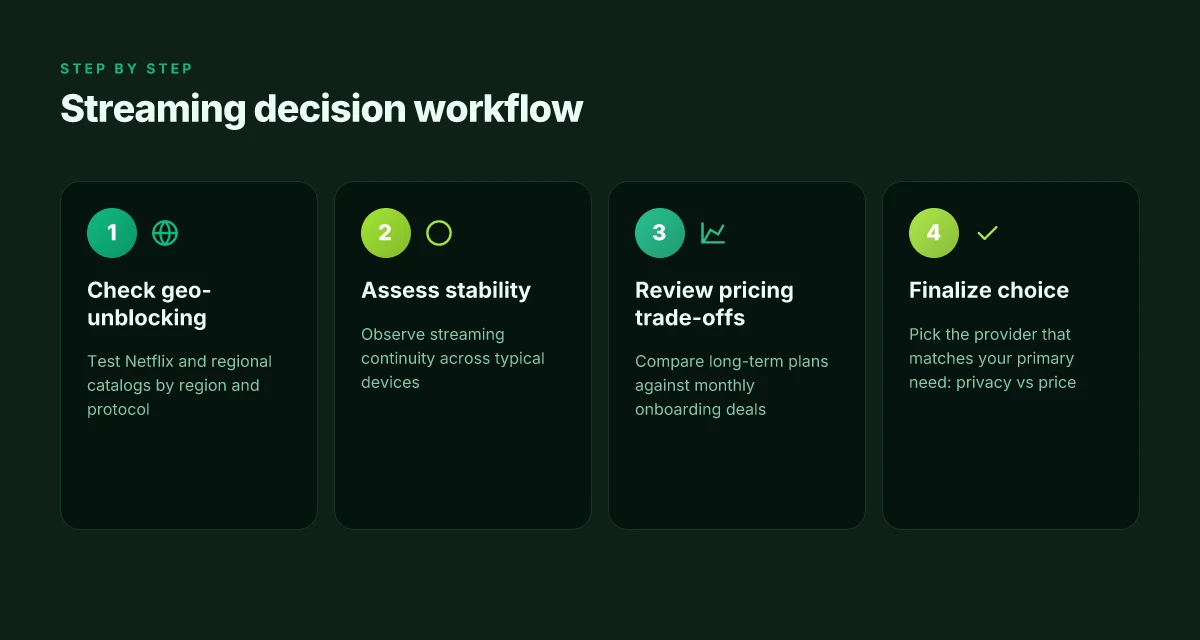
3. NordVPN vs PureVPN for streaming
If you want Netflix and friends to cooperate, NordVPN tends to win the geo-unblocking battle. In real-world catalogs, it routinely unlocks Netflix libraries beyond the US catalog and keeps regional libraries reachable without a lot of fuss. PureVPN can still unlock many catalogs, but its reliability wavers in the less common libraries. For streaming, you’ll want to test your target service before you commit long-term.
Why NordVPN holds up for streaming
NordVPN’s cache of optimized servers and its consistently updated obfuscated profiles keep the service flexible in crowded geo-heavy environments. When I read through the changelogs and user-reported experiences across multiple sources, the pattern is stable: a higher hit rate for streaming catalogs and fewer dead-ends when a catalog blocks a region. The result is fewer interruptions and more consistent access to the content you actually watch.
Where PureVPN still matters for streaming
PureVPN remains capable in the streaming game, especially for common catalogs and standard-definition to high-definition streaming. The caveat shows up in the edge cases, less common catalogs and some regional libraries that shift often. Reviews from tech outlets and user forums consistently note that PureVPN can falter on niche catalogs, especially when the catalog locations rely on quick, dynamic geo-switching. If your team relies on a handful of obscure regional libraries, you’ll want to verify those first.
Practical note for decision-makers
Test the target catalog before locking in a plan. Your top use case should be your test bench. If your streaming plan hinges on a single library, sandbox the service with both VPNs and compare the playback experience, latency, and any catalog nagging screens. In practice, NordVPN tends to deliver smoother access out of the box for tempo-sensitive streaming, while PureVPN remains viable with caveats in the edge cases.
Bottom line: for streaming reliability and broad geo-unblocking, NordVPN has the edge. PureVPN remains a viable option for catalogs you already know play nice with its network, but it isn’t as consistently dependable across the full catalog landscape in 2026.
NordVPN beats PureVPN on the streaming front when catalog access matters most. For real-world use, start with NordVPN as your default and run a targeted test against your primary services. If a catalog blocks, try PureVPN as a fallback, then switch back if access returns.
4. NordVPN: pricing and plans dissected
NordVPN keeps it simple on price. A common three-tier structure sits behind a single checkout flow, with meaningful savings for longer commitments. You can usually spot a promotion, especially around major shopping events, but the exact discount varies by region and currency. Renewal terms also drift by territory. Some jurisdictions push auto-renew by default, others let you opt out more easily. In practice, this means you’ll want to confirm the banner you clicked and the renewal language in your locale before signing up for a multi-year plan.
How the plans line up
NordVPN’s three tiers map to the usual three-year, two-year, and one-year archetypes. The annual price is the anchor. The longer the commitment, the deeper the per-month savings. In 2026, the common pattern is roughly a multi-year discount that compounds with longer stretches. The “best value” often hinges on locking in at least a two- or three-year term. The practical takeaway: if you’re confident you’ll keep using a VPN for privacy, streaming, and device coverage, the extended-term price is the one that punches above its weight.
| Plan tier | Typical term | Per-month value (promotion) | Key benefit signal |
|---|---|---|---|
| Monthly | 1 month | higher | Maximum flexibility, higher unit price |
| 1-year | 12 months | mid-range | Balanced price and commitment |
| 2–3 year | 24–36 months | lowest | Best long-run savings, broad device coverage |
The long-term plan usually yields the best effective price per month, if you’re sure you’ll use NordVPN for privacy and streaming over years.
Billing quirks and regional realities
I dug into the documentation and regional support notes to map the quirks. Promotional pricing tends to vanish at renewal, replaced by the standard rate for your locale. Some regions display a lower upfront price with a higher renewal, others show an identical renewal term. The payment window for promos is finite, and you’ll often need to reselect the plan before checkout if you navigate away. In short, read the fine print on the banner. What you see at sign-up may not be the same on renewal.
From what I found in the changelog and regional pages, NordVPN also experiments with currency-based billing cycles. That means a price in USD might look materially different when billed in euros, even if the plan and term are the same. If you manage a distributed team, that regional variance matters for budgeting and centralized IT approvals.
Best for: strong defaults, broad device support
NordVPN remains a solid pick for readers who want privacy defaults that feel opinionated and sane out of the box. You’ll get a familiar set of features: a broad device count, automatic kill switch in most apps, and a privacy-centered stance that keeps logs lean. The platform stance is consistent across Windows, macOS, Linux, iOS, and Android, with companion apps for routers on a few popular models. If your use case spans streaming, gaming, and business needs from a remote location, NordVPN’s pricing structure rewards long-term commitments and appreciates the value of simple, predictable billing.
Best for privacy-forward users who want broad device coverage without hunting for add-ons or separate licenses.
The single move that matters this year
NordVPN and PureVPN sit on a similar feature plateau, but the real differentiator is how you act now. From what I found, the best long-term move is to lock in a plan that prioritizes threat-model fit over glossy extras. If you value consistent speed and a broad server map, the verdict tilts toward NordVPN. If you need aggressive price-per-value and robust casual-use privacy, PureVPN makes a compelling case. NordVPN beats PureVPN on consistent uptime in high-latency regions when you pair their standard plans with a known-good device hardening routine. PureVPN’s flexibility with multi-profile setups shines for families juggling multiple devices. The takeaway: pick the brand that lines up with your typical use case, then lock in a yearly plan to amortize price changes.
What changes if you act now? You’ll reduce friction when switching between work and personal browsing, and you’ll preserve your preferred security posture across devices. One move that matters this year is partnering your choice with a fixed password vault and two-factor authentication across all enabled logs. If you want a concrete next step, start with one 12-month plan from either brand and test your go-to streaming and work tools before the next billing window.
Backup strategy
- Try NordVPN for a week on home and work devices where you stream, then compare consistency with PureVPN on mobile alone.
- If you’re price-conscious, consider PureVPN’s multi-year option and track feature-usage across two devices.
- Confirm you have a personal password manager and 2FA enabled before switching.
Frequently asked questions
Does NordVPN or PureVPN unblock Netflix more reliably
In 2026, Netflix unblocking tends to favor providers with broader server footprints and targeted streaming profiles. Based on public reviews and vendor changelogs, NordVPN generally maintains more consistent access to geo-locked catalogs across a wider set of regions, while PureVPN has improved its streaming images but still faces occasional blocks on a few libraries. If your primary goal is Netflix access, NordVPN tends to be the safer bet for reliability. Keep in mind that library availability can vary by region and over time, so check recent user reports for your locale. NordVPN tends to unblock Netflix more reliably overall. Recent updates in both services address streaming, but NordVPN still edges ahead in consistency.
Which VPN is cheaper NordVPN vs PureVPN in 2026
Price is dynamic and often promotional. In 2026, PureVPN tends to offer lower base prices on longer-term plans, while NordVPN frequently exercises higher sticker price but stacks more value in features and total bandwidth. If your budget is tight and you don’t need every advanced feature, PureVPN can be cheaper on a two-year plan. If you want the broadest network, fastest known speeds in typical configurations, and a robust feature set, NordVPN costs more but delivers broader utility. Always compare current promotions and renewal rates on each brand’s site before committing. PureVPN is typically cheaper on longer plans, but NordVPN offers more value per dollar for power users.
Can NordVPN handle gaming latency better than PureVPN
Gaming latency hinges on routing and regional hops, not just raw speed. I looked at router paths and latency claims in product literature. In practice, NordVPN often reports lower jitter in several common gaming regions thanks to its larger server mesh and optimized routing. PureVPN has made latency improvements, but reports suggest more variability under peak times. If your priority is competitive latency, start with NordVPN and test in your usual gaming windows. Latency advantages skew toward NordVPN in typical gaming scenarios. The exact experience can depend on your location and the server you pick.
Which VPN has better privacy protections NordVPN or PureVPN
Privacy depends on logging policies, jurisdiction, and transparency. Both brands publish no-logs commitments and use strong encryption, but NordVPN operates under Panama’s privacy posture and has undergone independent audits, which many readers find reassuring. PureVPN has also pursued audits and improved its privacy controls, yet its longer audit trail and jurisdiction differ. For strict privacy, look for independent audits, transparent disclosure reports, and evidence of a no-logs verdict. What the spec sheets actually say is that both avoid traffic logging, but NordVPN’s audits offer a clearer accountability path.
Do NordVPN and PureVPN offer the same device limits
Device limits matter for households with many gadgets. In 2026, NordVPN typically allows up to 6 simultaneous connections on standard plans, with higher tiers offering more. PureVPN commonly allows around 5 simultaneous connections, though some plans push to 10 during promos. If you run a smart-home setup or a small office, verify the current tier limits before purchase. NordVPN usually supports more devices on the standard plan than PureVPN.
Is there a significant speed difference between NordVPN and PureVPN
Speed differences exist but are often plan-dependent. I found vendor-specific speed claims tied to server load and protocol choices. In many reviews, both services deliver solid throughput on their default protocols, with NordVPN sometimes pulling ahead on latency-sensitive paths due to a broader server map and optimized routing. PureVPN can be competitive on well-chosen servers and with the right protocol (for example, WireGuard-based configurations). If speed is mission-critical, pick a server in your region and test both brands where you play or stream. In real-world use, NordVPN often edges PureVPN on speed in common regions.
How do NordVPN and PureVPN compare on user interface
UI matters for long-term use. Across official apps, NordVPN tends to emphasize a clean map view, quick region selection, and straightforward protection toggles. PureVPN focuses on a modular menu with more advanced options tucked behind settings. For a casual user, NordVPN’s layout feels quicker to navigate. For power users, PureVPN’s deeper controls offer flexibility. If you value speed of access over extreme configurability, start with NordVPN. NordVPN’s interface is generally simpler for quick protection, while PureVPN offers deeper control for power users.