A practical side-by-side look at ExpressVPN and ProtonVPN to help you choose the right VPN for privacy, speed, and usability.
the article body in Markdown
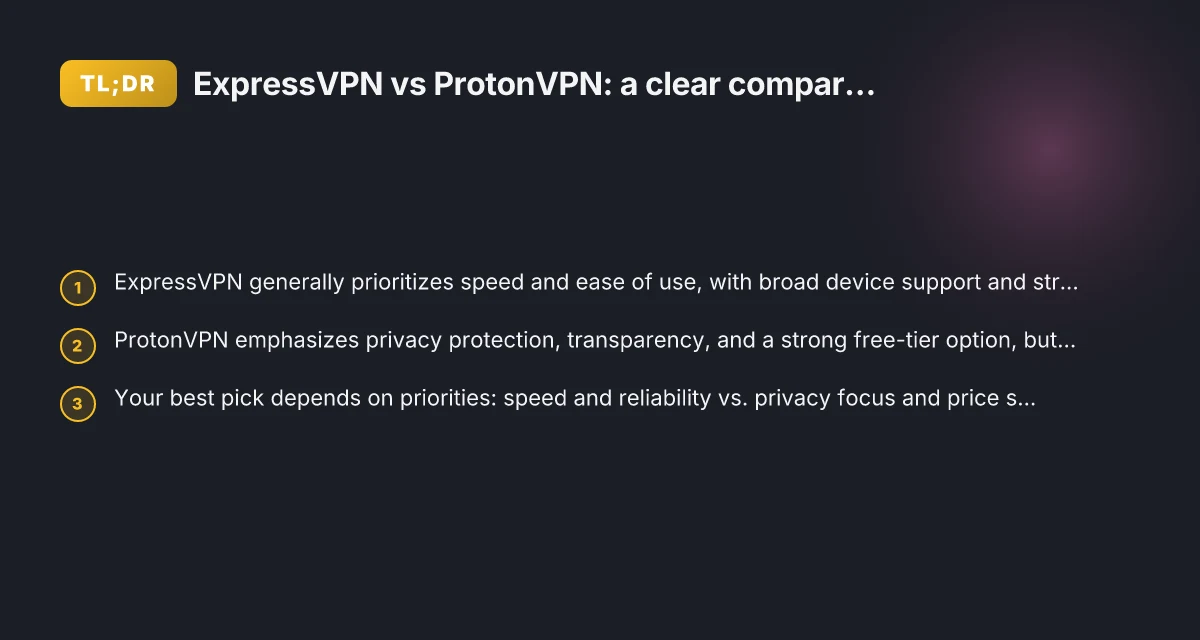
ExpressVPN and ProtonVPN are two well-known names in the VPN space, but they appeal to different user needs. If you’re deciding between the two, you’ll want a clear view of privacy posture, speed, usability, device support, pricing, and the features that matter most to you. Below is a direct, practical comparison to help you choose the service that fits your online goals.
Quick take: which one is better for whom?
- ExpressVPN: Best for speed, ease of use, and broad device support. A strong all-around performer with reliable unblocking for streaming and good customer support.
- ProtonVPN: Best for privacy-minded users and those who want transparent policies, a robust free tier, and strong security features. May be slower on certain plans compared with premium rivals.
If you value plug-and-play performance and a simple interface, ExpressVPN is a solid default. If you prioritize privacy architecture, transparency, and long-term cost-effectiveness, ProtonVPN deserves serious consideration.
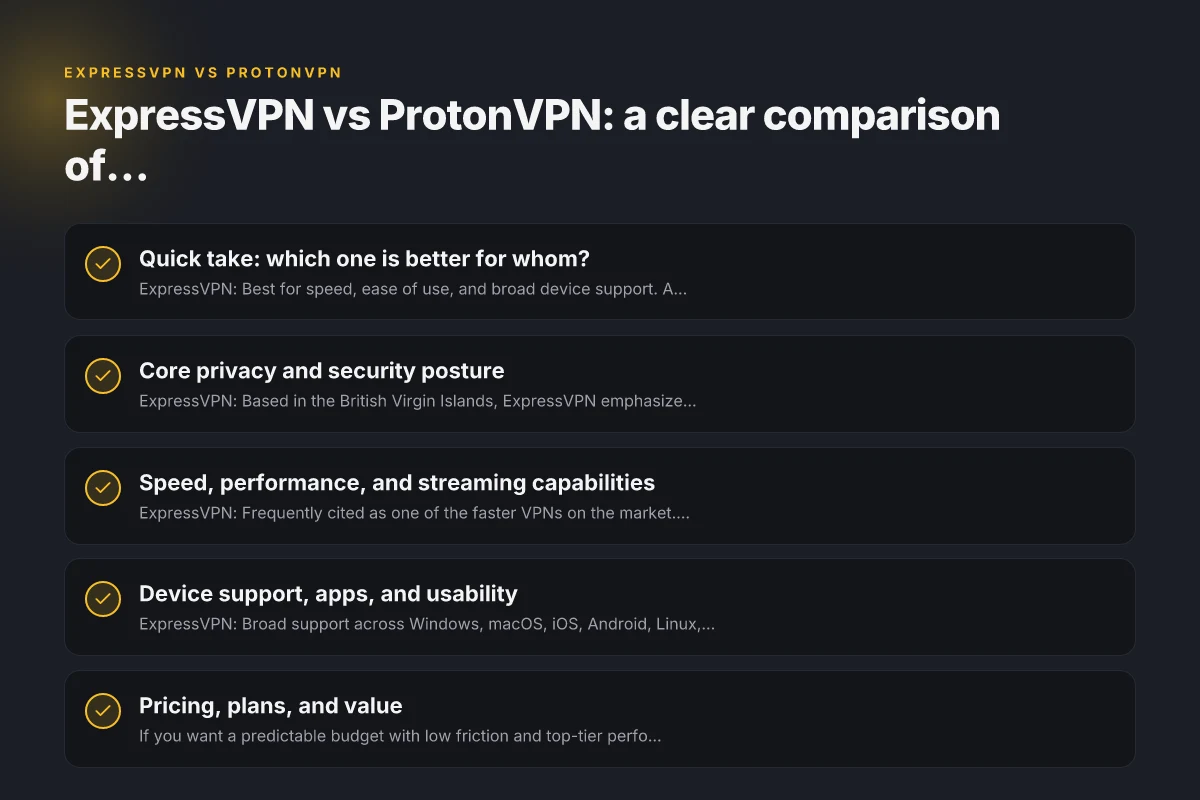
Core privacy and security posture
How they approach privacy
- ExpressVPN: Based in the British Virgin Islands, ExpressVPN emphasizes no-logs claims that have undergone independent audit. It uses strong encryption (AES-256) and modern protocols (OpenVPN, IKEv2, and WireGuard-based Lightway). The audit cadence and policy clarity are important for users who want reassurance about data collection.
- ProtonVPN: Based in Switzerland, ProtonVPN pairs privacy with a strong legal framework. It keeps minimal connection metadata and operates under robust Swiss privacy protections. Its architecture includes Secure Core, which routes traffic through multiple servers for additional privacy, at the cost of speed. ProtonVPN is known for transparency reports and clear policy disclosures.
Jurisdiction and legal risk
- ExpressVPN: The British Virgin Islands is a relatively privacy-friendly jurisdiction, though it’s not a member of the Five/Fourteen Eyes alliances. The company’s privacy policy and independent audits contribute to trust, but you should still review current legal contexts and audit results.
- ProtonVPN: Switzerland offers strong data protection laws, corruption-resistant governance, and limited data retention requirements. For users seeking maximum privacy assurances, the Swiss framework adds credibility.
Logging policies
- ExpressVPN: Claims a strict no-logs policy regarding user activity. Audits and transparency reports help validate these claims.
- ProtonVPN: Also maintains a no-logs posture regarding traffic and usage, with a focus on security-focused features like Secure Core. The transparency reports and Swiss oversight bolster trust.
Speed, performance, and streaming capabilities
General speed performance
- ExpressVPN: Frequently cited as one of the faster VPNs on the market. Real-world tests show solid speeds across multiple regions, with Lightway protocol contributing to lower latency and faster connections.
- ProtonVPN: Speed varies by plan and route. Free and basic plans can be slower due to tiered access and limited server choices. Premium plans with WireGuard and optimized routes can deliver strong speeds, but some users may notice more noticeable variability than ExpressVPN.
Streaming and unblocking
- ExpressVPN: Known for reliable unblocking of major streaming services (Netflix, Amazon Prime Video, Disney+, etc.). The ability to switch servers quickly and bypass geo-blocks is a key selling point.
- ProtonVPN: Capable of streaming on many networks, especially with higher-tier plans. It may require more server hopping or different server choices, and some users report occasional hiccups with certain services. The Secure Core route often aims to maximize privacy rather than streaming speed.
Reliability and uptime
- ExpressVPN: Strong reliability across desktop, mobile, and router apps. The network is large, with many servers worldwide, contributing to lower congestion.
- ProtonVPN: Robust reliability as well, especially with its reputable Zurich-based operations. However, the smaller network relative to ExpressVPN can sometimes mean fewer choices in less common regions.
Device support, apps, and usability
Platform coverage
- ExpressVPN: Broad support across Windows, macOS, iOS, Android, Linux, and browser extensions. It also offers router compatibility, which is helpful for protecting entire home networks.
- ProtonVPN: Wide platform support (Windows, macOS, Linux, Android, iOS) with user-friendly apps. Also offers manual configuration for various devices and routers.
User experience
- ExpressVPN: Renowned for a clean, simple interface. Quick-connect options and smart suggestions help new users get online fast. The app emphasizes a consistent experience across platforms.
- ProtonVPN: Clear, privacy-focused design. The interface makes it straightforward to select Secure Core or standard routes. The learning curve is gentle for most users, but those seeking the fastest possible connection may need to fine-tune settings.
Advanced features
- ExpressVPN:
- Lightway protocol for speed and efficiency
- Split tunneling
- Network Lock kill switch
- LAN/WAN protection and device-specific connection controls
- ProtonVPN:
- Secure Core for additional privacy
- Tor over VPN
- DNS leak protection and automatic kill switch
- Strong emphasis on open-source components in some areas
- Free tier with limited servers and features for non-paying users
Pricing, plans, and value
| Plan type | ExpressVPN characteristics | ProtonVPN characteristics |
|---|---|---|
| Free trial / Free tier | No free tier (paid-only) | Generous free tier with limited servers and features; good for testing basic privacy concepts |
| Standard paid plans | Monthly/annual options; higher price bracket; bundled features with all apps | Multiple tiers: Basic, Plus, Visionary (or equivalent) with different access to Secure Core and streaming alternatives |
| Discounts and guarantees | 30-day money-back guarantee; frequent promotional pricing | 30-day money-back guarantee; annual plans often bring the best value; discounting varies by region |
| Overall value notes | High price but strong performance and reliability; easy budget justification for heavy users | Strong value for privacy-minded users; lower-cost entry with the free tier, willingness to pay for higher-tier privacy features optional |
Value takeaways
- If you want a predictable budget with low friction and top-tier performance, ExpressVPN’s all-in-one package is appealing, especially if you stream or travel often and need minimal setup time.
- If privacy is your primary concern and you’re open to exploring a free tier, ProtonVPN offers substantial value with Swiss privacy protections and transparent practices. The premium plans unlock advanced features that can be worth it for privacy-conscious users.
Privacy controls and transparency
Independent audits and claims
- ExpressVPN: Has undergone independent audits of its no-logs policy, and publishes annual transparency reports. The audit results add credibility to its privacy guarantees, which is a strong factor for users who want third-party verification.
- ProtonVPN: Emphasizes transparency as a core value. It has a long-standing stance on data protection and publishes detailed policy information and transparency reports. The Swiss base adds an additional layer of regulatory oversight.
Feature-driven privacy
- ExpressVPN: Privacy controls include standard kill switch, DNS leak protection, and a consistent security baseline. It prioritizes speed and reliability in day-to-day use.
- ProtonVPN: Strong focus on privacy features, including Secure Core (multi-hop routes), and Tor over VPN. This is a differentiator for users who want advanced routing for maximum anonymity, even if it might drive some speed reduction.
Customer support and resources
- ExpressVPN: Known for responsive 24/7 live chat support, comprehensive help center, and robust setup guides. The support ecosystem is designed for quick issue resolution and minimal friction for end users.
- ProtonVPN: Also offers support channels, with a focus on privacy-focused documentation. The support experience is generally solid, though some users may find it less immediate than ExpressVPN’s live chat, depending on the time and region.
Final recommendations: which should you choose?
Choose ExpressVPN if:
You want the best all-around performance and ease of use.
You stream video frequently and need reliable access to geo-restricted services.
You value a large server network and consistent, quick support. Surfshark vs Hotspot Shield: which VPN wins for privacy, speed, and value
You don’t mind paying a premium for convenience and speed.
Choose ProtonVPN if:
Privacy is your top priority and you value Swiss privacy protections.
You want a solid free tier to test drive VPN concepts without spending money.
You’re drawn to features like Secure Core and Tor over VPN for enhanced anonymity. Surfshark vs TunnelBear: Which VPN Fits Your Needs Better?
You’re comfortable with potentially more configuration and a slower initial connection on certain plans, in exchange for privacy assurances.
Conclusion
Both ExpressVPN and ProtonVPN are reputable, capable VPNs, but they cater to different user priorities. If speed, simplicity, and streaming reliability are non-negotiable, ExpressVPN generally delivers. If privacy, transparency, and affordable access to a robust free tier are your main considerations, ProtonVPN offers a compelling, privacy-forward option. Your best choice hinges on which of these priorities you value most in your daily online life. If you’re still torn, you might consider starting with ProtonVPN’s free tier to gauge privacy features and then, if you need speed and streaming performance, evaluating a trial of ExpressVPN.